Showing posts with label Mobile Phones. Show all posts

Thursday, November 24, 2011

Mobile phones could replace cash by 2016

Consumers will be able to pay for everything on the high street with their mobile phones in five years time, a new survey says. 

Samsung's new Tocco is the first to use Barclaycard and Orange's 'Quick Tap' payment technology
Cash could be redundant by 2016 thanks to mobile phones


Research by Forrester, commissioned by PayPal, found that “2016 will be the year when UK shoppers will be able to use their mobile phones to pay for things on the high street with digital money rather than cash, cheques or cards”.

The findings are based on interviews with 10 senior executives from major UK businesses, representing a combined 2010 turnover of £85 billion.

Almost half of all mobile users purchase something via the device every three months, the study suggested, and more devices will be in circulation over the coming years.

Increasing numbers of online retailers are offering PayPal alongside credit cards, and eBay is to open a shop which encourages visitors to pay for goods with their mobile phones rather than at a conventional till.

Other incentives for customers to pay by mobile include location-based offers, digital loyalty cards and apps. PizzaExpress recently launched an app allowing users to pay their bill via their mobile, and Starbucks has recently announced a UK app that allows users to scan a code corresponding to their account and choice of drink.


Carl Scheible, Managing Director of PayPal UK, claimed, “We’ll see a huge change over the next few years in the way we shop and pay for things. By 2016, you’ll be able to leave your wallet at home and use your mobile as the 21st century digital wallet. 2016 will mark the real start of money’s digital switchover in the UK. We’re not saying cash will disappear entirely, but we’ll increasingly use our phones and other devices rather than our wallets to pay in-store as well as online.”


Scheible added that the “The lines between the online world and high street will soon disappear altogether. Children born today will become the UK’s first ‘cashless generation’. It will be completely natural for them to pay by mobile.”


PayPal said it expects to process more than $3.5 billion in mobile payment volume in 2011 – five times the volume it processed in 2010. By 2016, UK mobile retail sales will hit £2.5 billion, PayPal claims, as just over 14 million adults will regularly shop via their mobiles.

Monday, November 21, 2011

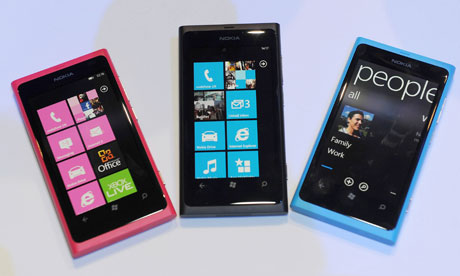
Nokia Lumia 800 mobile phone review

In its latest version, Windows Phone is the best thing Microsoft makes. Sadly, it’s never had hardware that really feels like a truly premium product – until now. 


Check out the gallery:


By , Consumer Technology Editor


The Nokia Lumia 800 is, according to CEO Stephen Elop, “the first real Windows Phone”. Other models, made by HTC and Samsung, have been decent enough, but they don’t offer the solidity of the new Lumia 800.

The operating system now boasts over 40,000 apps, too, so the two companies can claim that the partnership is already driving increased momentum for Microsoft's superb operating system.
And although the seamless polycarbonate shell and the solidity of the device are impressive, in fact it’s the Windows Phone software that really shines. Teamed with Nokia’s excellent design and camera heritage, there’s a lot to like, whether it’s the Office integration, gaming with Xbox live or simply social network integration.

The 3.7” screen offers Super AMOLED resolution, and Windows Phone’s living tiles really do look impressive; showing you the weather, a boarding pass or a friend’s photograph, the display hardware here is as good as this software needs. And the phone’s tactile, matte finish means the Lumia is not like the bar of soap that many other phones often seem to be modelled on. It’s also pleasingly weighted, at 142g.

Unique apps on the Lumia are limited; Nokia Drive offers a decent satnav alternative, but so do iOS apps and so does Google Maps on any Android phone. A Music app provides pre-arranged playlists, for people who would like a radio substitute. Elsewhere, of course, other Windows Phone apps can be downloaded from the main Microsoft Marketplace.


There’s no front camera on the Lumia 800, which will be a pity when Microsoft roles out Skype, but it does mean the all-screen design, hardly evolved from the N9, looks lovely. There’s a single-core 1.4GHz processor inside the Lumia 800 and 16GB of internal storage, and an 8mp camera on the back. With 512MB of RAM, the phone performs perfectly well enough.


What this device does, simply, is to give Windows Phone the flagship hardware it has deserved since the Mango update. That doesn’t make it as compelling a product as a top Android phone, but it puts Windows back in the game. And it shows up rival manufacturers: Samsung, for instance has excelled in designing Android devices, but its Windows devices have not had the same style.


Admittedly, with Nokia and Microsoft so closely aligned, why should others focus on Windows? If the Lumia ranges does as well as it could, then rival manufacturers may well see merit in putting more resources into developing Windows Phones. This, of course, is what Microsoft hopes and it may well work.


The Lumia 800 finally makes Windows Phone good enough to compete for early adopters’ attentions. But in truth that is not where Nokia or Microsoft is aiming – they want regular, mid-market upgraders to think Nokia is a good choice. They’re right, for the first time in years.


Friday, November 18, 2011

Amazon 'to build smartphone'

Amazon is developing a smartphone to bolster its hardware challenge to Android manufacturers and Apple, according to Citigroup analysts. 

Jeff Bezos with the new Kindle Fire tablet


The financial firm based its claim on discussions with electronics manufacturers based in Taiwan. It said that Foxconn, the Chinese manufacturer that makes the iPhone for Apple, was working with Amazon on the device.
“Based on our supply chain check, we believe FIH [Foxconn] is now jointly developing the phone with Amazon,” Citigroup said in a research note.
Foxconn is reportedly engineering the smartphone for a one-off fee. It will then be manufactured by Hon Hai, which makes the Kindle and Kindle Fire for Amazon.
“However, we believe that Amazon will pay NRE (non-recurring engineering fees) to FIH but the device and multiple components will actually be manufactured by Hon Hai’s TMS business group (the same business group that makes Amazon's e-reader and the 8.9” Amazon tablet),” Citigroup said.
The move would open up a new front in Amazon’s assault on the hardware business. It recently introduced the Kindle Fire tablet in the United States, which is already seen by many observers as the most credible challenger to the iPad to date. It runs an adapted version of Google’s Android mobile operating system, and Amazon has also developed its own vetting process for apps.

Citigroup speculated that Amazon could sell its smartphone, reckoned to cost between $150 and $170 to build, at a loss as it does with the Kindle Fire.

“For a normal brand like HTC, they need to price the product at $243 to make 30 per cent gross margin,” the research note said.

“If Amazon is actually willing to lose some money on the device, the price gap could be even bigger.”

The unnamed Amazon smartphone will use a Texas Instruments OMAP 4 processor, Citigroup said, based on the dual-core A9 architecture designed by the British firm ARM. The latest iteration of the processor is now emerging in the Samsung Galaxy Nexus.

More powerful versions will be available by the time Amazon launches its smartphone, which Citigroup said will be in the fourth quarter of 2012.

Samsung Galaxy Nexus review

Google's new flagship smartphone, made by Samsung, is the first to run Ice Cream Sandwich. It's also the first Android device to offer a premium experience, writes Matt Warman. 

Google's new Galaxy Nexus is made by Samsung and will launch in November

 By , Consumer Technolgy Editor.


Android now powers the majority of smartphones sold, but the approach is nothing like Apple. Google does not promote itself as the purveyor of perfect devices. Indeed, until recently Google’s chief mobile engineer, Andy Rubin, was still describing the platform as one ‘for early adopters’.
Increasingly, however, Google realizes it must offer the smooth experience that makes devices such as the BlackBerry and the iPhone feel so consistent and coherent. It’s this sense that inspires the devotion of users, which Google is seeking inspire with its new flagship handset, the Galaxy Nexus.
The first thing that strikes you is Its huge, 4.65-inch high definition display. Soon after the 1.2GHz dual-core processor proves it has plenty of oomph - thankfully, a slightly improved battery life just about lasts a busy day.
Manufactured by Samsung, the device builds on the success of the Nexus One, made by HTC, and Samsung’s follow-up, the Nexus S.
All of these devices were used by Google to debut new versions of Android and to drive manufacturers to make the hardware it thinks its operating system deserves. With this latest version, codenamed Ice Cream Sandwich, the search giant is finally getting there.


Tuesday, November 15, 2011

BlackBerry launches BBM Music and new smartphones

Troubled smartphone maker BlackBerry has announced the launch of BBM Music and two new handsets, the Bold 9790, which features a keyboard, and the touchscreen Curve 9380.


By , Consumer Technology Editor 


BBM Music will cost £4.99 per month, after a free 60 day trial period, and features tracks from record labels Universal, Sony, Warner and EMI, and integration with BlackBerry Messenger (BBM) contacts. BlackBerry claim “the more friends you are connected to on BBM, the bigger your music library becomes”.
The announcements were made as the company said it had passed 8 million UK subscribers, and claimed a 40 per cent growth in its worldwide subscriber base to 165 million smartphones. More than 50 million people now use the free BBM instant messenger service, compared to 28 million in October 2010.
The new devices, based on BlackBerry's new version 7 OS, feature a slimmer design and enhanced social media and multimedia integration, as well as a high-resolution display.
The new BlackBerry Curve 9380 is the first in the Curve range with a touch display.
Carlo Chiarello, Senior Vice President, Handheld Product Management at Research In Motion claimed that “BlackBerry smartphones offer a uniquely refined mobile communications experience that people love”. He said “many customers will be thrilled by the faster performance, beautiful touch displays and compact designs available with these new BlackBerry 7 based models”.

Check out the new models:

BlackBerry Bold 9790
BlackBerry Curve 9380


Motorola Razr phone review

The new version of Motorola's Razr phone is a remarkable piece of engineering - and sets a new standard for the company.


By , Consumer Technology Editor 

There are lots of things one might dislike about the Razr: open the box and it admonishes you to charge up the phone before using it, when so many phones no longer take the same hectoring approach. Turn the device on and where some Android devices demand a single sign in, the Razr wants plenty of yeses and noes to before you can get to doing anything.
But the Razr is exceptional in so many other ways it more than makes up for what are irritating foibles: at just 7.1mm thin, it is the worthy successor to the original clamshell handset that sold more than 130million units after it was launched in 2004.
Available on a number of networks in the UK from next week, the device features a Kevlar back, a top-of-the range 4.3” display and a 1.2GHz processor. That display is huge and remarkable in its brightness and detail.
Predictably, such a big screen does somewhat drain the battery life, but that difficulty with a full day's operation is becoming standard for all top-of-the-range phones, the iPhone 4S included. The phone will feature an 8megapixel camera and can record in full 1080p HD video.
Elsewhere, the Razr is running Android 2.3.5, enhanced by Motorola’s own adjustments. These will not be to everybody’s taste, but they do add useful features and provide a different aesthetic to the standard Android look. A new app called MotoCast allows the device to stream or download content such as music, films or files from any computer in the world, so long as it is also using MotoCast. A new feature called “Smart Actions” will also automate certain settings, so that, for instance, the phone can automatically put itself on silent when the GPS registers that it has entered its owner’s workplace.


Monday, November 14, 2011

Scented iPhone cases launched by Jelly Belly beans

Users of the Apple iPhone have long been able customise their devices with distinctive cases – but they’ve never been able to make them smell like fruit. Until now. 


By , Consumer Technology Editor

Jelly Belly, makers of the popular candy beans have launched scented covers for Apple and BlackBerry devices.
Manufacturers claim “the Jelly Belly secret jelly bean recipe has been used to scent each case and the product is tipped as one of the hot crazes to hit shelves this Christmas”.
Flavours available include Bubblegum, Very Cherry, Blueberry, Top Banana, French Vanilla, Liquorice, Grape and, of course, Green Apple and Wild Blackberry.
The gel cases will fit the iPhone 4 and 4S models, and Blackberry 8520 and 9300 models. They are “in the same vibrant colours as the popular beans”, and also come with a 10g pack of Jelly Belly beans. The camera lens hole is also the shape of a jelly bean.
The iPhone cases are available from today at £17.99 from The Carphone Warehouse; the BlackBerry cases will be available more widely and cost £15.99.

Friday, December 10, 2010

Is Nexus iPhone’s nemesis?

Matt Warman reviews Google’s new phone, and says it’s almost enough to shake up the market.


Google's new Nexus S has been developed in association with Samsung .
 
Google’s new Nexus S is the mobile phone that the search giant – and partner manufacturer Samsung – hopes will allow it to set out a serious challenge to Apple’s iPhone. 

That is, of course, the aspiration of every phone manufacturer on the planet, and Apple’s device has relentlessly raised the bar in its recent evolutions. Above all, the iPhone user experience is effortlessly simple, and the interface clarifies complex tasks. It’s an imperfect handset, but the iPhone, overall, remains the least imperfect package available today.
Google’s rival Android operating system is, according to the man in charge, Andy Rubin, “an enthusiast product for early adopters – or wives of tech enthusiasts”. With 300,000 Android phones activated every day, however, there are clearly a lot of early adopters about.

One of Android’s strengths is its diversity: scores of mobile phone manufacturers use it and there’s a version of it on products at every price. But the Nexus S is the flagship device. It’s currently the only phone to run the latest version, codenamed Gingerbread, and the only one with “near field communication” (NFC) and an updated interface.

In the hand it feels lighter than the iPhone and other top handsets such as the HTC Desire HD. Its slightly curved screen, designed to feel more natural in a pocket or against the face, is exceptionally vivid, and almost as crisp as the iPhone’s “Retina Display”. Battery life, finally, is a significant improvement on previous Android iterations, just getting me through a day of intensive use.

Indeed, that issue of battery life touches on the most important issue for the Nexus S: it does more than any phone on the market. It can be a portable wireless hotspot; that NFC chip may in the future allow it to be used as a credit card; there are internet phone calls; peerless voice operation; there’s even a cute, cathode ray tube-style animation as the phone goes into standby. Your old Nokia might last a week between charges, but the Nexus S is, in terms of the demand it places on a battery, like trying to run half a dozen phones at once.

In truth, however, it is an incremental improvement on previous versions of Android. Those whizzy features are all valuable, but the user experience is not yet totally slick. Andy Rubin has already demonstrated the next version of Android, and clearly Google knows this is where it must do significantly better.
The S is the follow-up to Google’s first own brand phone, the Nexus One. Eric Schmidt, Google’s Chief Executive, told the Telegraph in June that there would be no Nexus Two. The first foray was “so successful, we didn’t have to do a second one” he said. Now on Twitter Schmidt observes, “I said there wouldn’t be a Nexus 2 but I never said anything about the letter S!”

What the S underlines is that Google realizes that only by total integration between hardware and software, however will it produce a really impressive handset. The UK’s mobile lead for Google, David Burke, observed that one reason for working with partners directly was simply that “we learn so much”. Google knows it does not have all the answers. Companies such as Motorola, which only make Android handsets, or HTC, who made the Nexus One, are crucial to Android’s development.

Indeed, one could argue that those manufacturers’ own improvements to Android are actually ahead of Google’s own. Nexus S is marketed as “Pure Google”. Take one look at the bald interface to set the alarm clock, and you may wish for a little less purity. Apps can help, of course. And Gmail on an Android handset just gets cleverer and cleverer. But Google could fix many holes in Android simply by looking at the Nexus S’s competitor models.

Only available from Best Buy and Carphone Warehouse, the Nexus S is not cheap. It’s £550, or free on £35 a month. An iPhone starts at £499. So is Android the future? Without a doubt. Is it yet the present? For “early adopters” it surely should be. For the rest of us the decision remains tantalisingly complicated. The must-have mobile is still the one out soon.

Friday, November 26, 2010

Web searches for HTC phones outstrip iPhone

Shoppers are more likely to search for HTC’s handsets when researching new phones than Apple’s flagship handset, research reveals. 


The research, conducted by mobile phone comparison site Good Mobile Phones, revealed that HTC’s Wildfire, Desire and Desire HD were the three most searched-for phones on the site, with Apple’s iPhone 4 in sixth place.
More searches were also carried out over the 30-day period for Samsung’s Galaxy S handset and Nokia’s flagship N8 than for the iPhone.
The BlackBerry Curve 8520, Samsung Tocco Lite, BlackBerry Torch and Sony Xperia X10 Mini made up the rest of the top 10 most searched-for phones.

Five of the best HTC phones

Three years ago, few had heard of HTC, but the Taiwanese manufacturer now enjoys an excellent reputation. Here, we pick five of its best handsets: 


HTC Desire HD 
 
Super-fast 1GHz processor means surfing the web, tapping out an email, or playing a game all run smoothly on this well-designed device, which boasts a pin sharp 4.3in screen.


Tuesday, November 2, 2010

Sony breaks silence over ‘PlayStation phone’ rumours

A Sony executive has hinted that it will be bringing a PlayStation phone to the market, following leaked photos of such a product appearing online last week. 


 Leaked photos have appeared online, purporting to show the fabled 'PlayStation Phone', which could be launched next year.

The photos, which were leaked onto Engadget’s site, purported to show a Sony Ericsson handset combined with a PlayStation Portable games console. 

The blog speculated that the device will run the upcoming version of Google’s Android operating system, known as Gingerbread, along with a custom-made “Sony Marketplace” that will enable people to download games designed specifically for the device.


Engadget expects the device to be launched officially next year, and an announcement about the so-called PlayStation phone’s availability could be made at Mobile World Congress in February.


Last week Sony refused to comment. However, Masaru Kato, Sony’s chief financial officer, hinted it may launch a PlayStation phone product on an earnings call over the weekend.

He said, through an interpreter: “As for the new PSP product, as mentioned, I know that you are not asking me to tell you when we will be coming out with a new product, but there is a gaming market based on [the] cellphones, and there are many changes that are being seen [with] Nintendo, as well as ourselves, in the field of the product for the gamers. And there are smartphones and others or even cellphones gaming markets are very popular here in Japan. So the market itself is very... expanding.”
He stopped short of talking about specific products, but also mentioned the company’s interest in tablet computers.
“Of course, we can't talk about specific products, but smartphones and tablets... it is difficult to tell you how we can put the games on them, but they are not going to be planned in different parts of our company. 

“When we organized ourselves last April, we introduced network services, and within that umbrella, network services, all of these products are handled. Therefore, the planning and the prototypes for various content [are] all carried out within this... one umbrellas. So we are trying to figure out what we can do as Sony in this market. I think this is as far as I can tell you regarding these products at market," he explained. 

Speculation has been rife for some time that Sony would license its PlayStation brand to the Sony Ericsson mobile arm of its business. In July last year, Nikkei, a respected daily business newspaper in Japan, reported that Sony was considering such a product. 

Sony was said to have set up a dedicated team to work on the handset, that would bring together the Sony Ericsson division with the multimedia and gaming team behind the PlayStation Portable handheld games console. 

Sony is said to be concerned by the threat posed by Apple’s iPhone. Dozens of major games studios, including Capcom and Electronic Arts, are developing games for Apple’s touch-screen device, potentially pitting the iPhone and iPod touch directly against Sony’s PSP console and Nintendo’s hand-held device, the DS. 

However, gaming fans will not be getting their hopes up – rumours of a PSP phone first surfaced in 2007, when Sony filed a patent application showing a portable games device with phone capabilities, while in January 2009, Sony was said to have refused to sanction the use of the PlayStation brand by its Sony Ericsson telecoms arm.

Apple iPhone 5 ‘to feature NFC support’

The next model of Apple’s iPhone range could feature built-in Near Field Communication technology, allowing it to double as a mobile payment system, and a way of replicating your home computing experience on any Mac, according to reports. 


Apple could build NFC in to the next iPhone, turning it in to an e-wallet, and allowing people to carry their Mac settings with them to use on any computer
 
 
Apple’s next iPhone could feature built-in Near Field Communication technology that will turn the device in to an electronic wallet, and allow Mac users to have exactly the same computing experience on any machine, according to the latest rumours.
Cult of Mac reports that an unnamed source informed them of the purpose of the NFC chip that is expected to be built in to the next-generation iPhone.

The technology blog reports that the chip will turn the iPhone in to an “e-wallet”, allowing owners to wave their iPhone over a contact pad in order to pay for items such as coffee, books or CDs in participating retailers.

But the source also claims that Apple has other plans for the NFC chip, and is exploring ways of using the technology to enable users to store their personal Mac computer settings on their iPhone, and then transfer those settings to another Mac with a flick of the wrist.

“For example, an NFC iPhone will allow users to carry a lot of their desktop data and settings with them, and load that data on to a compatible Mac,” reports Cult of Mac.

reports Cult of Mac. “If users wave an NFC-equipped iPhone and an NFC-equipped Mac, the Mac will load all their applications, settings and data. It will be as though they are sitting at their own machine at home or work. When the user leaves, and the NFC-equipped iPhone is out of range, the host machine returns to its previous state.”

The source told Cult of Mac: “The system would essentially turn any Apple computer in to your own, like you’re actually working on your own computer; same settings, look, bookmarks, preferences. It would all be invisible. Your iPhone would be all you needed to unlock your Mac.”

Apple has refused to be drawn on the claims, and said it did not comment on rumours and speculation.

However, Apple has recently recruited a number of NFC experts to its engineering ranks, and is said to be considering the acquisition of Vivotech, a company that specialises in contactless payment and Near Field Communications technology.

Apple has also built a huge data centre on the east coast of the United States, fuelling speculation that it is to expand its cloud computing offerings.

Friday, October 29, 2010

Apple iPhone sales outstrip BlackBerry, according to report

The success of Apple’s hugely popular iPhone range has seen it overtake Research in Motion, which makes the BlackBerry, as one of the world's biggest mobile phone companies. 

Around 1.3 billion mobile phones will be sold this year, according to Strategy  Analytics
 
Apple shipped 14.1 million handsets during the most recent financial quarter, up 91 per cent on the same quarter last year, according to analysts at Strategy Analytics. 
Bumper sales of Apple’s flagship iPhone 4 has seen the company outperform Research in Motion, the Canadian company that makes the BlackBerry range of smartphone devices. RIM shipped 12.4 million units during that period, an increase of 46 per cent on the same quarter last year. 

The reversal of fortunes has prompted some industry experts to question whether the popularity of the BlackBerry could be on the wane, as other devices match the mobile emailer for efficiency and usability.

A total of 327 million mobile phones were shipped worldwide during the third financial quarter of this year, up from 291 million on the same period last year. Strategy Analytics said that growth had been less than expected and slightly down on the first six months of the year, but blamed this on component shortages and ongoing economic volatility which “slightly constrained volumes”.

Nokia remained the biggest mobile phone maker in the world, shipping 110.4 million handsets worldwide during the third financial quarter. The company has undergone a shake-up in recent months, with several key executives, including chief executive Olli-Pekka Kallasvuo, announcing their departure.

Thursday, October 7, 2010

Browser wars: the rise of Chrome threatens Internet Explorer, and Mozilla's revenue

Internet Explorer now accounts for less than 50 percent of worldwide web browser usage, a fall from its peak of 88 percent in 2003, Firefox is stalling and Chrome is on the rise. What can we expect from the next web browser war?


The emergence of Google Chome in mid-2008 has hit Internet Explorer hard. A fall below the psychologically important barrier of 50 percent market share makes the latest version, Internet Explorer 9, all the more important for the company.
The rise of Chrome is also affecting Mozilla Firefox, the second most popular desktop web browser, which has stayed at 30 percent market share since May last year.

Web browsers are big business. Mozilla has revealed that in 2008 it pulled in $79 million of revenue from ads served up when you use the Google, Yahoo or eBay search box or download Google's toolbar.
Google's investment in Chrome is certainly motivated by this revenue stream. Why should it pay out for the referrals when it can serve them up for free within Chrome?

Mozilla's long-term advertising deal with Google ends in 2011. No surprise then that Mozilla is reaching out to other ad partners: Microsoft announced last week that the new version of Firefox 4 will include an option for searching via Bing.

Mobile web development is an underappreciated area, but one which will become more and more important over the next decade.

source, from wonderful site: http://www.telegraph.co.uk/technology/internet/8048679/Browser-wars-the-rise-of-Chrome-threatens-Internet-Explorer-and-Mozillas-revenue.html

Monday, September 27, 2010

Windows 7 phone release date on 21 October


Sources said that Microsoft would be launching their Windows 7 Phone on 21 October.
They will be released in the USA on November 8th.

The phones will be ableto fownload media from Microsoft's Zune store.

Microsoft confirmed they were having an event on October 7th, but failed to say whether it was about the phone or not.
A spokesman said: ''w have nothing to sharat this time.''